Protecting Your Health: Post-Wildfire Air Quality
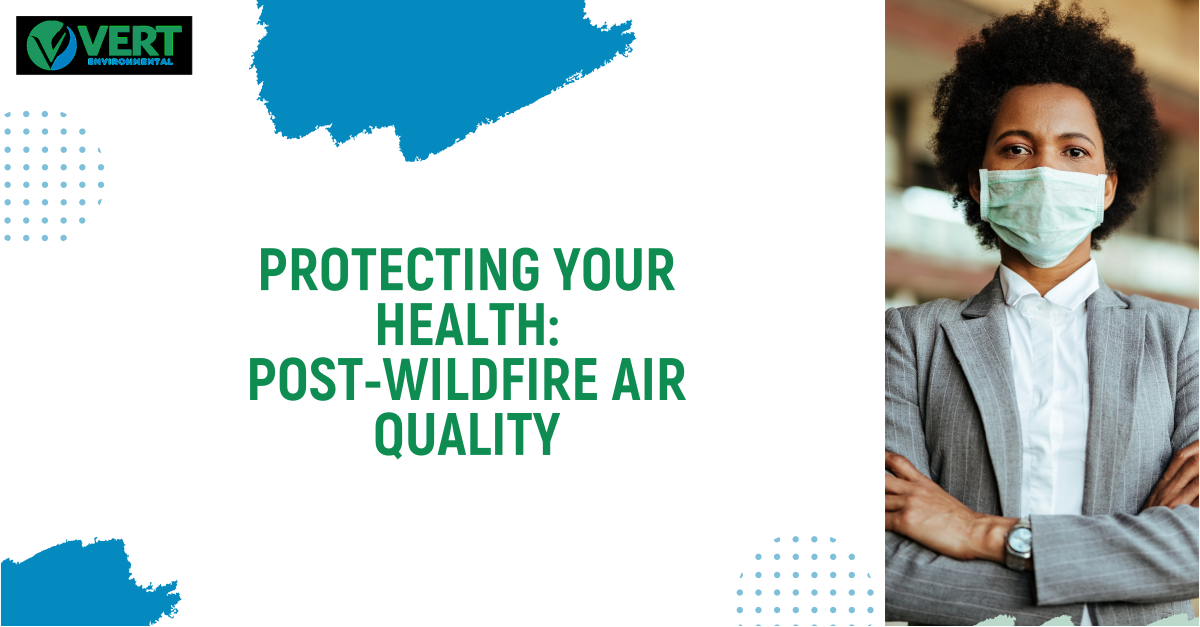
Wildfires have become a grim and recurring feature of our changing climate. They ravage landscapes, devastate communities, and leave behind an often-overlooked threat: poor air quality. In this post-wildfire world, understanding the importance of air quality monitoring is crucial for safeguarding your health and the well-being of your loved ones.
Understanding Wildfire Smoke
Before we delve into the significance of monitoring post-wildfire air quality, let’s grasp what wildfire smoke is all about. This smoky brew is a toxic mix of gases and fine particles produced when organic matter burns. It includes carbon dioxide, carbon monoxide, water vapor, and a slew of harmful chemicals and fine particulate matter known as PM2.5.
Health Risks of Poor Air Quality
The risks associated with breathing in wildfire smoke are far from trivial. Short-term exposure can lead to irritated eyes, throat, and lungs, while long-term exposure has been linked to serious health issues such as:
- Respiratory infections
- Aggravation of pre-existing lung and heart conditions
- Reduced lung function in children
- Increased risk of heart attacks
The Role of Air Quality Monitoring
So, how do you protect yourself when wildfire smoke casts a shadow over your region? The answer lies in air quality monitoring. This essential tool keeps you informed about the current air quality conditions, helping you make informed decisions about your daily activities.
Common Air Quality Index (AQI) Metrics
To gauge air quality, experts use the Air Quality Index (AQI), a standardized scale that measures the concentration of key pollutants. These include PM2.5, PM10, ozone, carbon monoxide, and sulfur dioxide. Understanding AQI values empowers you to make choices that protect your health.
- Good (0-50): Air quality is satisfactory; no health risk.
- Moderate (51-100): Some pollutants may be a concern for a few people who are unusually sensitive.
- Unhealthy for Sensitive Groups (101-150): Members of sensitive groups may experience health effects. The general public is unlikely to be affected.
- Unhealthy (151-200): Everyone may begin to experience health effects; members of sensitive groups may experience more serious health effects.
- Very Unhealthy (201-300): Health alert: everyone may experience more serious health effects.
- Hazardous (301-500): Health warnings of emergency conditions. The entire population is likely to be affected.
Protective Measures
When wildfire smoke rolls in, it’s time to take action to protect your health and the health of your family. Here are some practical steps to consider:
- Stay indoors: If possible, stay indoors where the air is filtered.
- Use air purifiers: Air purifiers equipped with HEPA filters can help remove fine particles from the indoor air.
- Wear N95 masks: These masks can help filter out harmful particles when you need to go outside.
- Limit outdoor activities: Minimize physical exertion when air quality is poor.
- Keep windows and doors closed: Prevent outdoor smoke from infiltrating your home.
Community and Environmental Impacts
Poor air quality doesn’t just affect individuals; it can have far-reaching community and environmental consequences. Wildlife habitats are threatened, visibility is reduced, and air quality regulations may be triggered, affecting industries and economies.
Monitoring Your Indoor Air Quality
While outdoor air quality monitoring is essential, don’t forget about the air inside your home. Monitoring indoor air quality can provide an added layer of protection. Proper ventilation and air filtration systems can help keep your indoor air clean.
The Role of Vert Environmental
In your efforts to protect your health, you don’t have to go it alone. Vert Environmental is here to assist you. Our experts specialize in air quality monitoring and consulting, offering comprehensive assessments and solutions.
In a world where wildfires are increasingly common, post-wildfire air quality monitoring is not a luxury—it’s a necessity. Protecting your health and the health of your family means staying informed and taking proactive steps to mitigate risks.
For expert air quality testing and solutions, visit Vert Environmental’s website. Ensure clean indoor air and safeguard your well-being today.

Related Articles

New GSA Drinking Water Testing Rules: What You Need To Know
New Radon Testing Rules: What’s Changed?